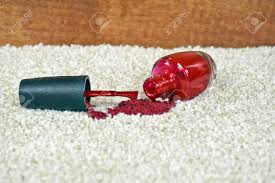
Red wine on light carpet is one of the few stains that makes people audibly groan. Most hosts have been there. Someone's elbow catches a glass, half a merlot hits the carpet, and everyone in the room has an opinion about what to do next. Usually half those opinions are wrong.
What actually works, and in what order:
The first thirty seconds matter most
Red wine sets fast. Within a few minutes it starts bonding to the carpet fiber, and after an hour or two it becomes genuinely difficult to fully remove. Your goal in the first thirty seconds is simple: get as much of the wine off the fiber as possible before it has a chance to grip.
Blot, don't rub. Grab a clean white towel (white matters — colored towels can bleed dye into the wet carpet) and press straight down. Lift, rotate to a dry spot on the towel, press again. Repeat until the towel barely comes up with anything. Rubbing grinds the wine sideways into the fiber and makes the stain bigger.
Cold water, not hot. Add a small amount of cold water to dilute what's left and keep blotting. Hot water opens the carpet fiber and sets stains faster. Save the hot water for washing the towel afterward.
What to do next
Once the bulk of the wine is out, you have a few minutes to treat what's left before it sets. Two approaches work reliably:
Dish soap and cold water. A small bowl of cold water with a few drops of plain dish soap. Apply with a clean white cloth, blot again. The surfactant in dish soap lifts the remaining wine pigment without damaging the fiber. Rinse by blotting with plain cold water, then blot dry.
Hydrogen peroxide. On white or light carpet, a 3% hydrogen peroxide solution can lift what dish soap couldn't — but always test a hidden corner first. Peroxide can bleach some carpet dyes. If the test spot holds its color, apply a small amount with a cloth and let it sit five minutes, then blot. Rinse with cold water.
Don't reach for salt, club soda, or white wine. Salt pulls moisture but also pushes pigment deeper into the fiber where it's harder to get back out. Club soda doesn't do anything dish soap doesn't already do better. And pouring white wine on top of red is an old bit of folk wisdom that doesn't survive contact with actual carpet chemistry.
When it's already set
If you're reading this the morning after rather than the moment it happened, different rules apply. A dried wine stain is still treatable, just harder.
The enzyme-based spot removers you can buy at hardware stores work reasonably well on set wine — Folex and Resolve are the two most widely used. Follow the directions, blot rather than scrub, and don't over-apply. More product isn't more cleaning. It just leaves more residue for dust to stick to later.
For a bad set-in stain on visible carpet — especially on light or beige carpet where the pink ghost is obvious — professional cleaning is usually the right move. A low-moisture process can reach the pigment that's gripped the fiber without saturating the pad underneath, and it won't leave a ring around where your DIY attempt stopped. That's what we do on residential jobs throughout Evans and the rest of Columbia County.
The difference between "clean" and "removed"
Not every wine stain comes out 100%. If the wine sat overnight, soaked the pad, and the carpet is a light berber, sometimes the best you can hope for is getting it mostly invisible. A good professional cleaner will tell you that honestly before they start, not after you've paid.
When you call us, we'll look at the stain under good light and give you a straight read on what's likely to happen. If we can fully lift it, we'll tell you. If we can get it down to a mark you have to look for to see, we'll tell you that too. If it's a permanent dye change, we'll say so rather than charging you for a job that won't satisfy.
What makes red wine particularly difficult
The pigment that makes red wine red is a family of compounds called anthocyanins. Same pigments that give red cabbage, blueberries, and cherries their color. They're water-soluble when fresh, which is why cold-water blotting works on a wet spill. As they dry and oxidize, though, they bond to carpet fibers pretty tightly. Once that bond forms, water alone can't break it. You need a surfactant, an oxidizer, or an enzyme to break the chemistry.
Tannins — the astringent compounds in red wine that make your mouth feel dry — make the problem worse. They act like glue, helping the pigment adhere to the fiber. The heavier the wine (cabernet, malbec, shiraz), the more tannins, and the more stubborn the stain. A light pinot noir spill is far easier to remove than a cabernet.
Temperature matters too. Room-temperature wine does less damage than a chilled rosé, because cold wine penetrates carpet faster before it evaporates off the surface. Same volume, worse stain. Counter-intuitive, but true.
One more factor: carpet construction. Cut-pile and loop-pile carpets behave differently under a spill. Cut-pile hides the stain visually until it's deep in the fiber, which is actually worse because you have less warning. Loop-pile shows the stain immediately on the surface, giving you a few seconds more to react. Neither is "better" for wine — but if you have loop-pile berber, the stain you can see is the whole stain; if you have cut-pile, assume there's more down there than you can see from above.
Common mistakes that make the stain worse
A few habits we see repeatedly on jobs where customers have already tried to fix it themselves:
Bleach. Chlorine bleach removes color from the wine stain AND from the carpet dye underneath. The "stain" is now a color-stripped patch. On white carpet the trade can work out; on anything colored it creates a worse-looking problem than the original wine.
Carpet shampoo machines rented from the grocery store. The detergents these machines use leave a sticky residue. Even if the wine lifts, the residue becomes a dirt magnet — within a month the spot is visible again, this time as a dingy patch instead of a wine mark.
Aggressive scrubbing with a brush. Scrubbing pushes pigment deeper into the fiber and can fuzz the carpet pile, creating permanent visual damage. Blotting works; scrubbing doesn't.
Stacking products. Hitting a stain with dish soap, then hydrogen peroxide, then enzyme cleaner in sequence doesn't compound results — it creates chemical reactions that can set the remaining pigment permanently. Pick one approach, use it properly, rinse thoroughly.
Heat. Steam mops, hair dryers, or running a hot iron over a towel "to lift" the stain all accelerate the chemistry that sets it. Cold water until fully clean, then dry at room temperature.
Ready to book?
If you're dealing with a wine stain (or any of the other things red wine leads to — a sofa cushion that's seen better days, a dining chair with a permanent bib of pinot), call 803-310-3848 or book online. Same-day appointments are often available in Evans, Martinez, and the rest of Columbia County.
And our carpet cleaning service is the one most people book for a whole-room reset after a spill — three rooms for $88 if it's your first time with us.